
Hawaii Police Blotter
The Hawaii Police Blotter is the daily log of adult arrests kept by the four county police departments across the state. You can search the Honolulu, Hawaii, Maui, and Kauai logs to look up the name of the person held, the time of the stop, and the charge. Each county posts its adult arrest log online, and older logs can be pulled through a written request. This page shows you how to search the Hawaii Police Blotter, which office holds the file, and where to read the rules that keep each blotter open to the public.
Hawaii Police Blotter Overview
Where the Hawaii Police Blotter Lives
Four county police departments file the Hawaii Police Blotter. The Honolulu Police Department covers Oahu. The Hawaii Police Department covers the Big Island. The Maui Police Department covers Maui, Molokai, Lanai, and Kahoolawe. The Kauai Police Department covers Kauai and Niihau. Each one runs its own arrest log, and each one pushes new pages to the web on its own schedule. The log is not one file. It is a set of four local books tied together by state law.
Under the Uniform Information Practices Act, all four logs must stay open to the public. The Office of Information Practices wrote that rule in OIP Opinion Letter 91-04. The letter told each chief of police that adult blotter data is a government record. It must be available for anyone to read and copy. The OIP also said that juvenile arrest data stays closed. That rule is set by section 571-84(e) of the Hawaii Revised Statutes. So the Hawaii Police Blotter you can see is the adult log.
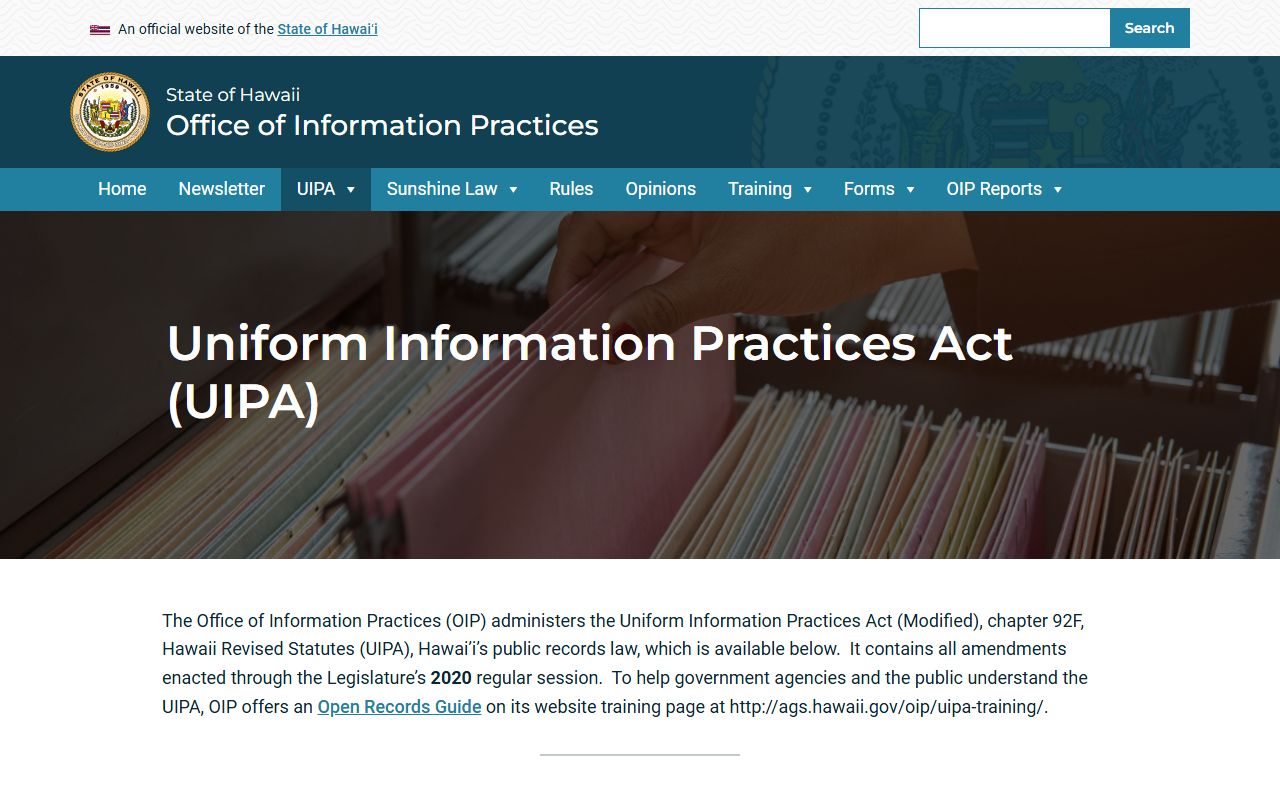
The OIP page above holds the full text of the UIPA at chapter 92F. It is the law that forces each county to hand you the blotter on request. The portal is kept by the Office of Information Practices in Honolulu. Call the OIP at (808) 586-1400 if a station tells you no.
Note: Each county runs its own arrest log; there is no one statewide Hawaii Police Blotter page. Pick the county where the stop took place.
How to Search the Hawaii Police Blotter
There are three main ways to search the Hawaii Police Blotter. You can read the live log on each county's web page. You can file a request for an older log with the Records and Identification Division. Or you can use the state system for old cases that ended with a conviction. Each path gives you a different slice of the data.
The fast way is the online log. Go to the HPD arrest log page if the stop was on Oahu. Oahu logs are set on the web each day. Each page stays live for 14 days, then it rolls off. The HPD page shows the date and time of the stop, the name of the person held, their age and sex, the arresting officer, and the charge. That is the raw Hawaii Police Blotter for Honolulu County.
Hawaii County posts its blotter as Media Booking Logs in PDF. Each log runs 48 hours. It shows the offender tracking number, the name, and every charge. The file is a snapshot, so the data may change later. The Hawaii Police Department also runs a live crime map and a page of weekly press notes. Those sit under News and Media on the new site.
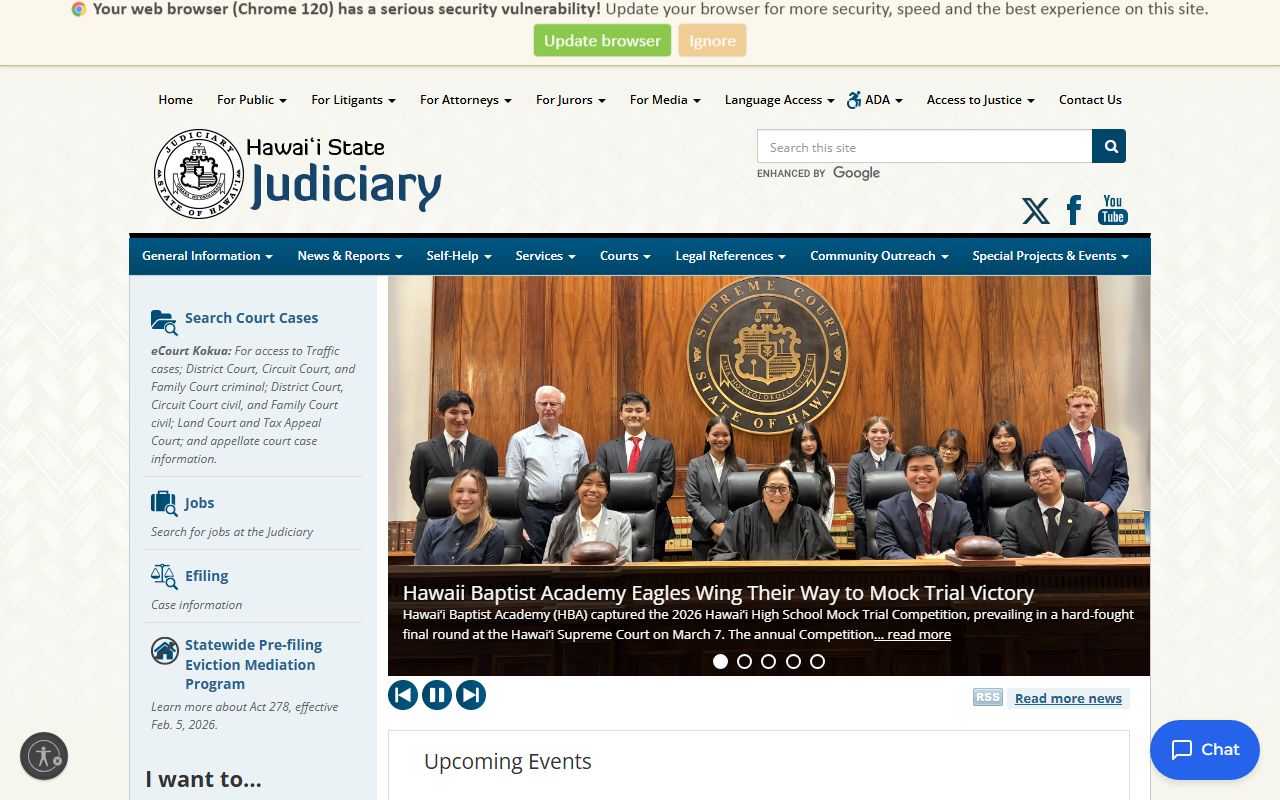
The state court system runs eCourt Kokua. That portal lets you search any case by name, case number, or date. It covers the Supreme Court, the Intermediate Court of Appeals, the Circuit Courts, the Family Courts, the District Courts, and the Land Court. If a Hawaii Police Blotter entry led to a court case, that case sits here. eCourt Kokua is the best way to tie a blotter line to a real charge and a real date.
To run a solid Hawaii Police Blotter search, have these ready:
- Full name of the person you are looking up
- Date or rough date of the stop
- County or island where the arrest took place
- Report number if you have one
Hawaii Criminal Justice Data Center
The Hawaii Criminal Justice Data Center, or HCJDC, keeps the state's criminal history record. It sits inside the Department of the Attorney General. The HCJDC runs the CJIS-Hawaii system, the state fingerprint database, the Sex Offender Registry, and the eCrim web site. It is the one place that holds data from every police force, sheriff, court, jail, and parole board in the islands. More than 458,000 offenders and two million records sit on file.
The HCJDC office is at 465 S. King Street, Room 102, Honolulu, HI 96813. Hours run 8:00 a.m. to 4:00 p.m., Monday through Friday, with lunch from 12 to 1. Call (808) 587-3279 for a criminal history record check. Call (808) 587-3350 for the Sex Offender Registry. Call (808) 587-3348 for expungements. Each of these numbers ties to part of the Hawaii Police Blotter life cycle, from first arrest to final clear.
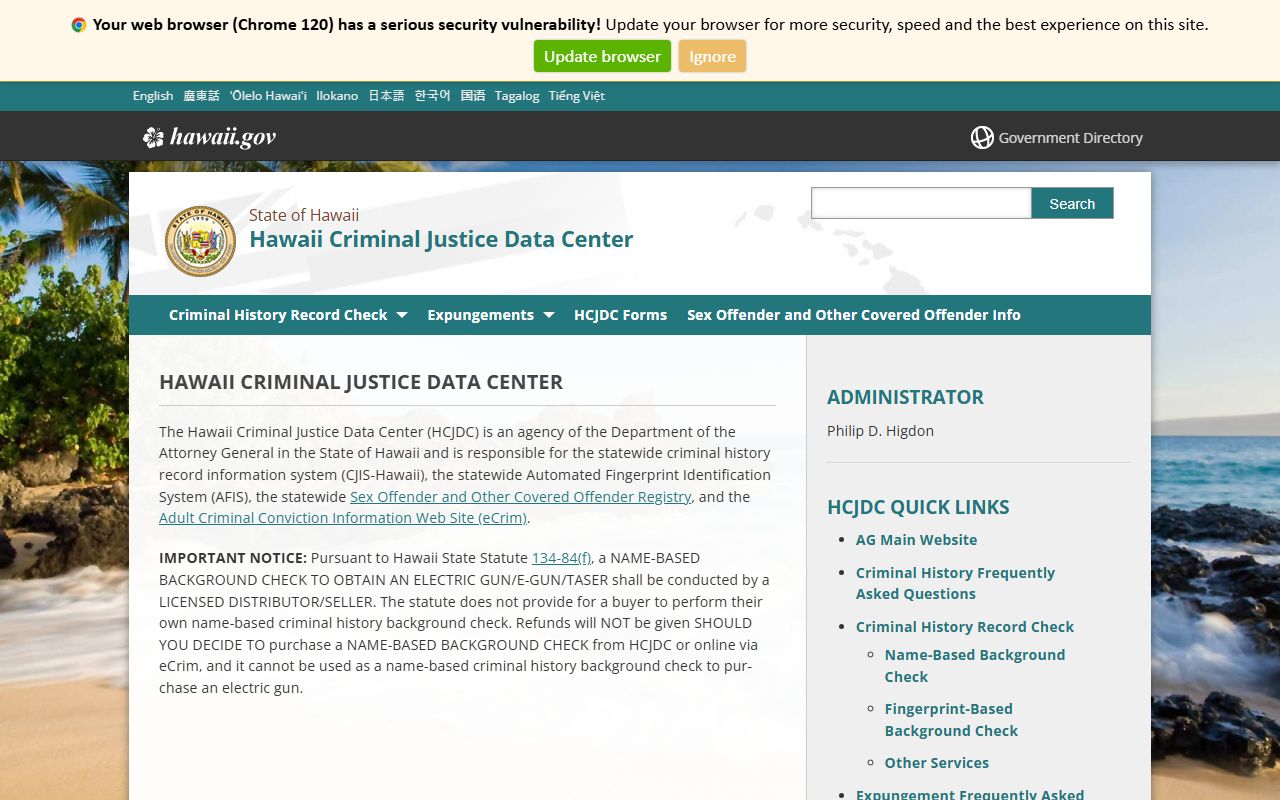
The HCJDC home page above lists every service, fee, and form. This is the office to call when a name shows up on the Hawaii Police Blotter and you want to know what the court did with the charge.
Note: The HCJDC holds only adult Hawaii records; it does not pull from the FBI, other states, or juvenile cases under Family Court.
eCrim and Public Access Sites
eCrim is the online arm of the Hawaii Police Blotter system. You can find it at ecrim.ehawaii.gov. The site holds adult conviction records only. A name search costs $5. A certified print of the record costs $12. A first-time user pays a $1 check on a credit card to confirm a real name. The system is open 24 hours a day and returns results right away. Each eCrim record shows the last name, first name, any alias, sex, age, height, weight, every charge, each disposition, and the case number.
You can also walk in to any Public Access Site in person. Each site prints a paper copy for $25. The Public Access Sites are: the HCJDC at 465 S. King Street in Honolulu; the Honolulu Police Department at 801 South Beretania Street; the Hawaii Police Department at 349 Kapiolani Street in Hilo; the Kona Police Station at 74-5221 Queen Kaahumanu Highway; the Kauai County Police Department at 3990 Kaana Street, Lihue; and the Maui County Police Department at 55 Mahalani Street, Wailuku. All six sites pull from the same state file.
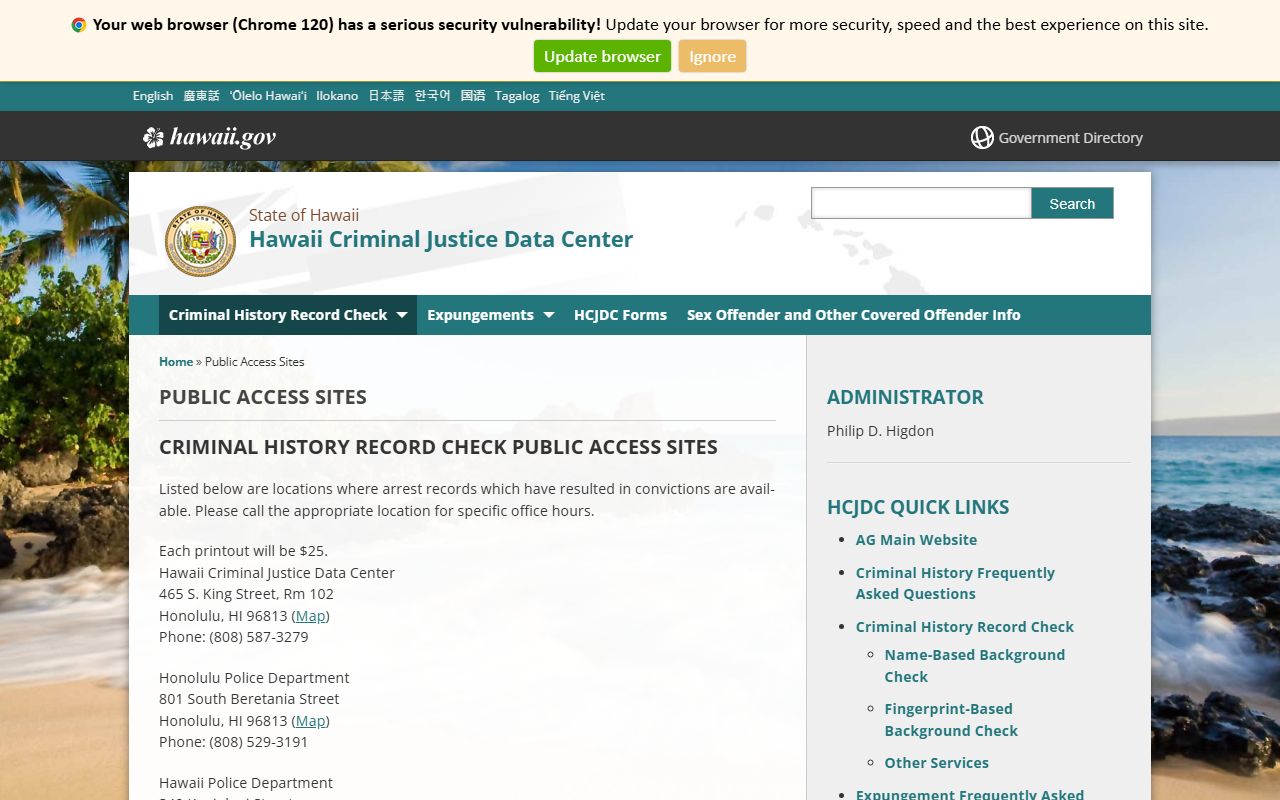
The site list above is the full Public Access map for the state. Call each site first to check the hours. Only money orders and cashier's checks are good. No cash is taken at the HCJDC. The printout you walk out with shows every Hawaii conviction on file for that name.
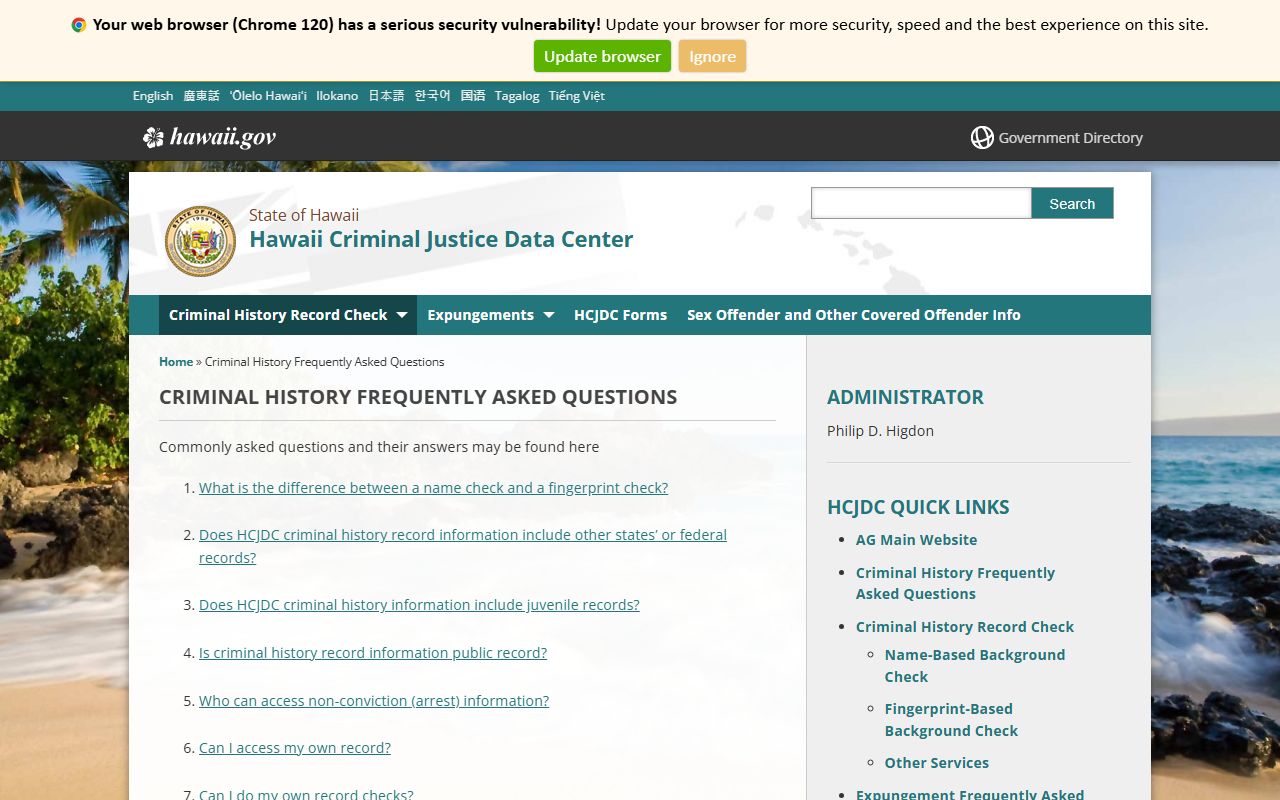
The FAQ page walks through the name check versus the print check. A name check is fast but not as sure. A print check uses real fingerprints from the station that booked the person. A print check is the gold standard in any Hawaii Police Blotter follow-up. Use a fingerprint check if the stakes are high.
Hawaii Police Blotter Fees and Forms
The Hawaii Police Blotter itself is free to read online. Old logs, copies, and certified prints all carry a fee. The Honolulu Police Department charges $0.50 for the first page of a police report and $0.25 for each page after. A color copy is $0.65. A verification letter is $1.00 for the first page. The Hawaii Police Department on the Big Island charges $1.00 for the first page of a report and $0.10 for each page after. Only cash is good at the Big Island window. Maui and Kauai set their own schedules close to the UIPA floor.
Under Hawaii Admin Rule 2-71-19, each agency may charge $2.50 per 15 minutes to search for a record. Review and segregation run $5 per 15 minutes. The first $30 in search and review fees is waived for every request. If the request serves a public interest, the waiver jumps to the first $60. Keep that waiver in mind when you ask for a long run of Hawaii Police Blotter pages.
The fingerprint check form is HCJDC-073. Each county station takes the card for $25. The HCJDC processes the card for $55 in person or $35 by mail. Add $20 for a certified seal. A notary costs nothing.
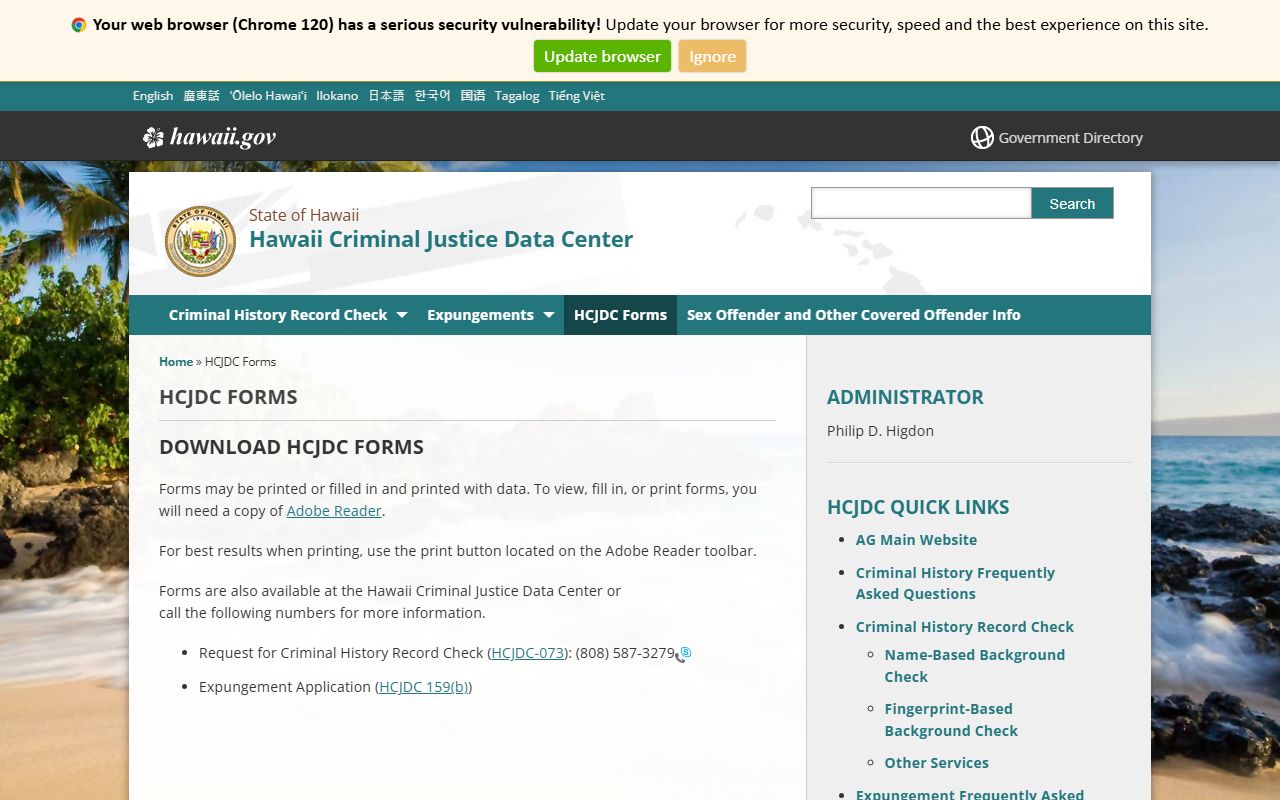
The HCJDC Forms page holds HCJDC-073 and every other check form the state uses. Print the form, fill it in, and mail it with a money order. The fingerprint page has the full step-by-step for the print check.
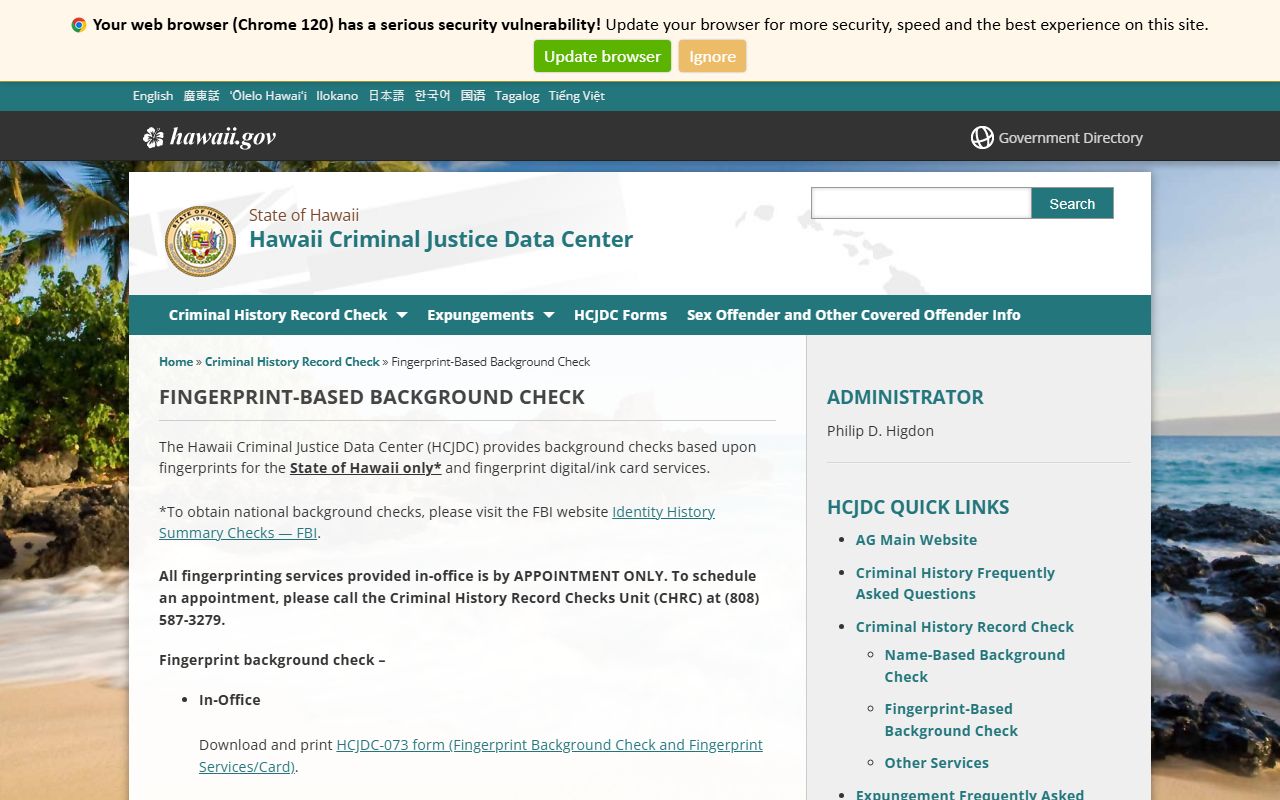
The HCJDC window is by appointment only for the print check. Call (808) 587-3279 to book a slot. A clean print card is the one way to be sure a name on the Hawaii Police Blotter lines up with the right person.
Laws Behind the Hawaii Police Blotter
Three sets of state law keep the Hawaii Police Blotter open. The UIPA at chapter 92F is the core. Section 92F-12 is key. It says each agency shall disclose records about the arrest, indictment, or charging of a person. That line is why the blotter stays public. Chapter 846 of the Hawaii Revised Statutes sets the rules for the HCJDC and for the split between conviction and non-conviction data. Section 846-9 draws that line in hard ink.
HRS 803 gives the police the power to make the arrest that starts the Hawaii Police Blotter entry. An officer may stop a person with a warrant or without one if there is probable cause. Once the cuff goes on, the entry is made. The entry stays on the Hawaii Police Blotter even if the case is dropped later. The court record may be sealed under HRS 831-3.2 with an expungement order, but the original arrest log page stays in the archive.
The OIP published Opinion Letter 91-04 in March 1991. That letter set the frame for every Hawaii Police Blotter policy in force today. The HPD, Hawaii Police, Maui Police, and Kauai Police each wrote internal rules that track the OIP line. The rules are why the 14-day window is the same on every island.
Crime Data and Annual Reports
Behind the Hawaii Police Blotter sits the Uniform Crime Reporting program. The Crime Prevention and Justice Assistance Division runs this program. CPJA pulls UCR reports from all four county police forces, checks the data, and sends it on to the FBI. CPJA also posts the Crime in Hawaii report each year. The report is where you find long-range trends, not day-to-day arrests.
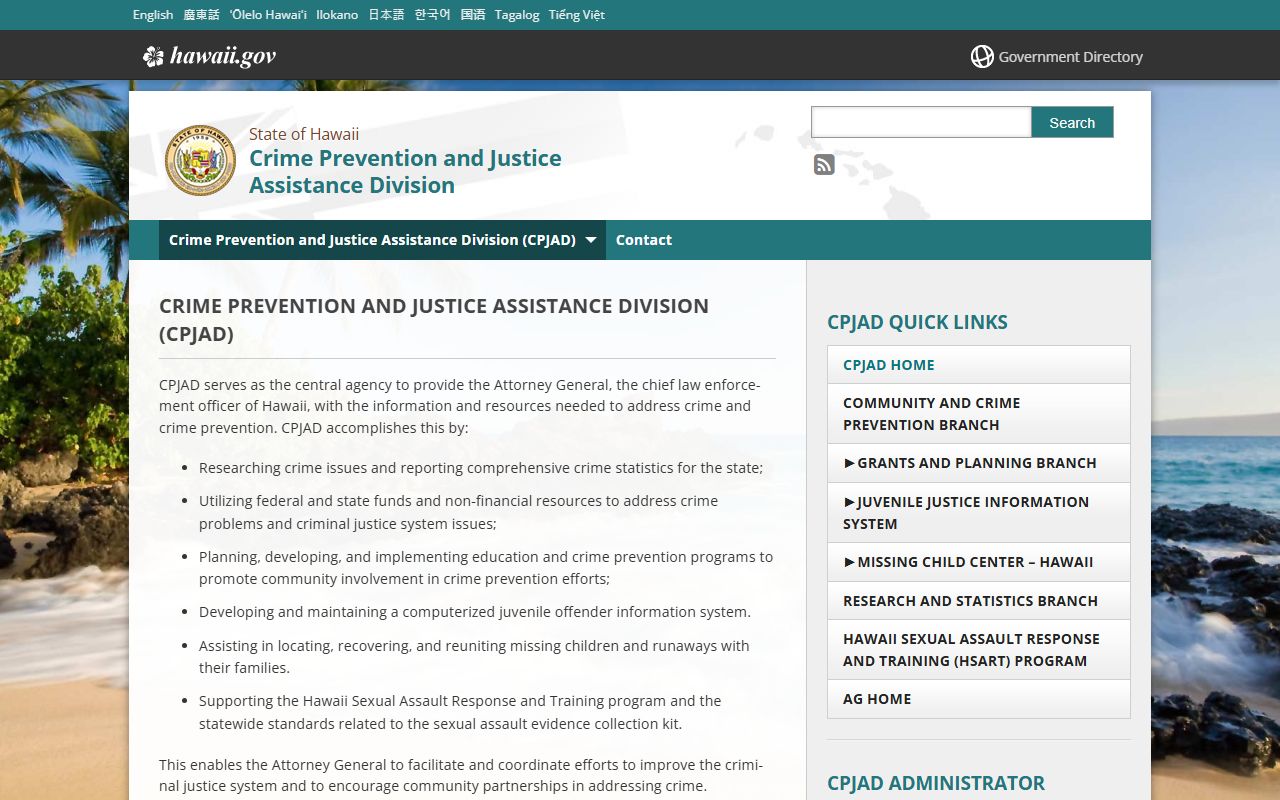
The CPJA is at 235 S. Beretania Street, Suite 401, Honolulu, HI 96813. Call (808) 586-1150. The office shares space in the Attorney General's division, so the front desk can point you to HCJDC or back to the county force if you need a raw Hawaii Police Blotter page. The NIBRS dashboard run by CPJA shows county-level arrest counts by age, sex, and race.
The Hawaii Department of Public Safety holds the back end of the Hawaii Police Blotter path. Once the court sets a term, the Department of Corrections and Rehabilitation runs the jail file. DCR runs the Oahu Community Correctional Center, the Halawa Correctional Facility, and the neighbor island jails. An inmate search tool is run on a vendor site.
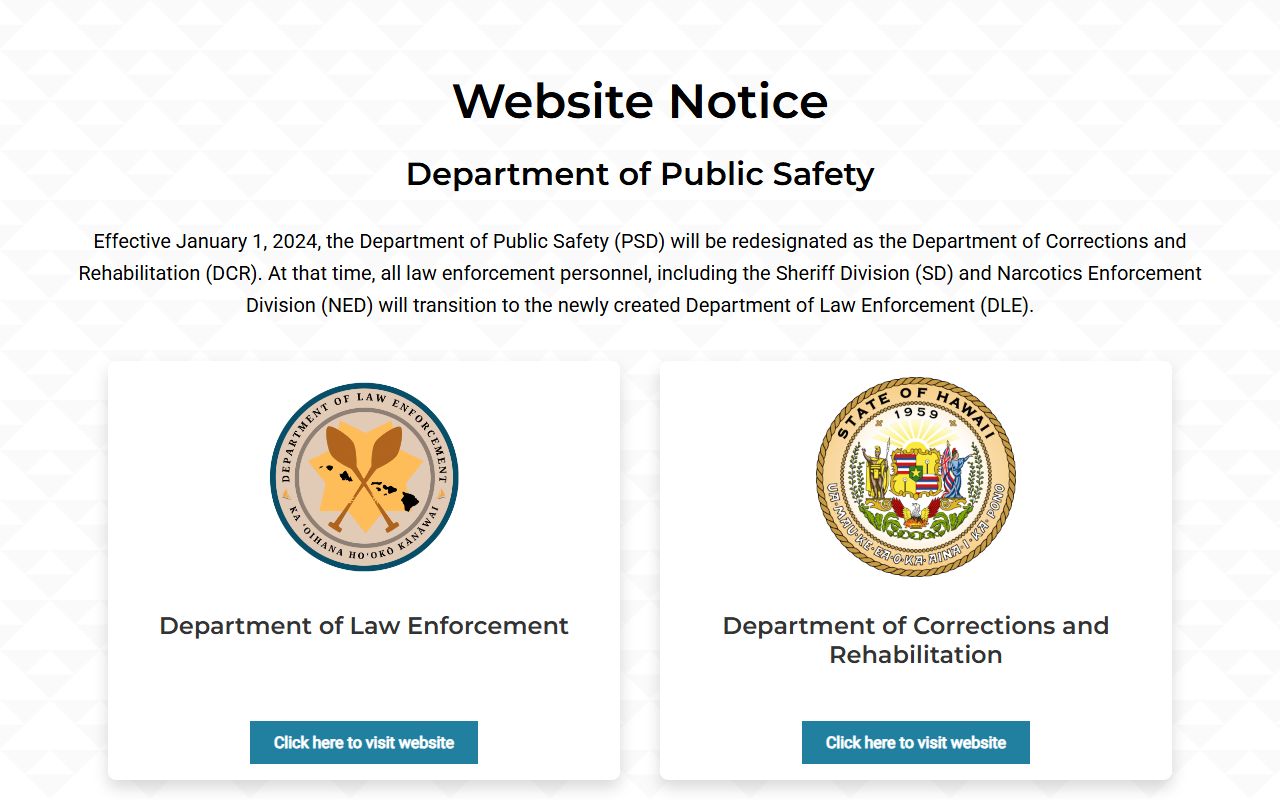
DPS is the end of the line for most Hawaii Police Blotter cases that end in a term of more than a year. For shorter terms and pretrial holds, the Community Correctional Centers are the right stop. The DPS site links to the third-party inmate search.
Note: Federal cases are run by the U.S. Marshals and the Bureau of Prisons, not DPS, so a federal Hawaii Police Blotter hit is tracked on a separate path.
Hawaii Police Blotter by County
Each county keeps its own cut of the Hawaii Police Blotter. Pick the county where the stop took place to find the right clerk, the right phone, and the right web link.
Hawaii Police Blotter by City
Most cities sit inside a single police district. Pick the city to see which district, which phone line, and which web log feeds that area of the Hawaii Police Blotter.